

LEARN HOW TO RECOGNISE THE SIGNS OF TRACTION ALOPECIA AND TAKE THE PRESSURE OFF YOUR HAIR AND SCALP.
A sleek ponytail, intricate braids or added length can be part of your signature style. But when a hairstyle repeatedly pulls at the roots, it can strain the follicles. Over time, that tension may lead to traction alopecia.
What causes traction alopecia?
Traction alopecia develops when repeated or sustained pulling damages hair follicles. Tight ponytails, buns, braids, cornrows, heavy extensions and some hairpieces can all contribute, depending on how they are fitted and worn.
The risk increases when tension is combined with chemical processing or excessive heat, which can leave strands more vulnerable to breakage. It can affect any hair type, although tightly curled hair may be particularly susceptible.
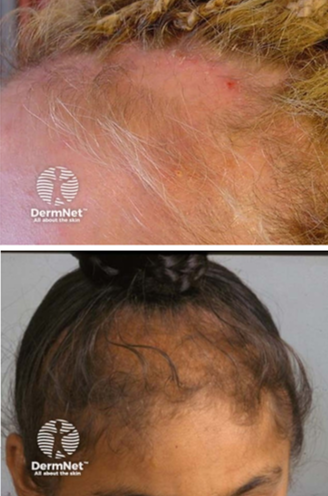
The thinning area often reflects where tension is greatest: around the temples and front hairline, beneath attachments, or at the back of the scalp.
Notice what your scalp is telling you
Early signs include short, broken hairs; thinning edges; or areas that look less dense. If a style causes pain, stinging, tenderness, or persistent pulling, loosen it or remove it.
Redness, bumps or crusting may indicate inflammation. In longstanding cases, affected areas can become smooth and bare as follicles are permanently damaged.
A trichologist can assess the pattern and styling history. Medical assessment may be needed where inflammation is significant, or another form of hair loss is suspected.
Take the pressure off
The most important step is to relieve the tension rather than treating the hair while the pulling continues.
Loosen your style: Choose comfortable hairstyles that allow movement at the roots.
Reduce weight: Avoid heavy extensions or accessories that place sustained pressure on fragile areas.
Vary placement: Change where you position ponytails, buns and attachments, while keeping each style loose.
Protect delicate hair: Reduce chemical processing and excessive heat, particularly around thinning areas.
Handle gently: Condition regularly and detangle carefully to limit additional breakage.
Give recovery time
A gentle scalp cleanse and a break from tight styling can support a calmer routine. Conditioning helps protect the strands, but cannot repair a scarred follicle.
Where inflammation is present, a clinician may recommend treatment. After assessment, minoxidil is sometimes considered to support regrowth, but removing traction remains essential.
If follicles remain viable, improvement can emerge over the next few months. Where scarring has occurred, regrowth may be limited. Seeking advice early can help protect your hair and guide the most appropriate treatment.


© 2026 The Hair Consultancy